
.avif)
What are contract terms? Understanding the fundamentals
Discover what contract terms are and why understanding their fundamentals is critical for legal and business success.

Contracts often get a bad reputation for being dense and intimidating, filled with legal jargon that can make anyone's head spin.
While a contract might seem like a tangled web of confusing terms and clauses in a legal document, understanding contracts can be much easier than you think.
In this blog, we’ll break down contract terms into bite-sized pieces so that even if legal lingo isn't your strong suit, you’ll walk away feeling more confident.
Main takeaways from this article:
- Understanding contract terms is crucial for defining parties' rights and obligations, ensuring clarity and enforceability.
- Differentiating between legal contract terms and clauses can help grasp a contract's structure and specific details.
- Key elements like express terms, implied terms, conditions, warranties, and innominate terms impact how a contract is interpreted and enforced.
- Familiarity with essential contract terms such as payment terms, confidentiality clauses, and termination conditions can prevent potential disputes and misunderstandings.
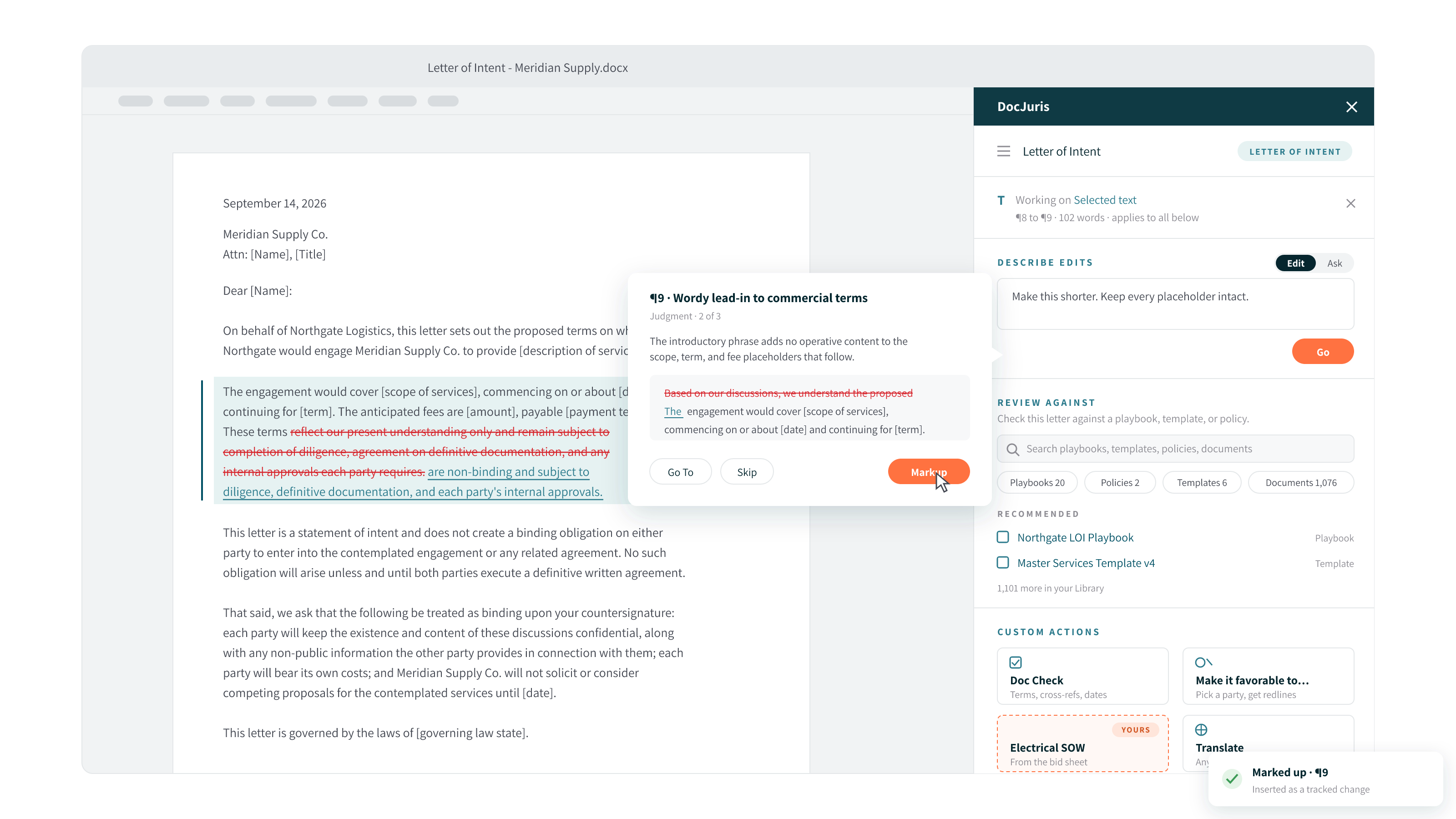
- DocJuris' AI-powered tools enhance contract management by ensuring consistency, compliance, and efficiency in the review and markup process.
What are contract terms?
Contract terms are the stipulations or provisions that define the rights and obligations of the contracting parties. They structure the agreement, ensuring clarity and compliance. These terms can be explicit, written down clearly, or implied, understood through conduct or law, thus playing a crucial role in contract enforcement and overall legal responsibility and integrity.
Contract term vs. contract clause
When examining contract intricacies, it's essential to understand the distinction between contract terms and contract clauses. Here's a snapshot of their primary differences:
- Contract terms: These are the fundamental elements of a contract that outline the rights and responsibilities of each party. They include both express and implied terms that form the backbone of the agreement. Contract terms are designed to ensure that both parties clearly understand their obligations and the expectations from the agreement. They create a framework within which the contract operates.
- Contract clauses: Clauses are the building blocks of a contract. Each clause focuses on specific topics such as payment terms, confidentiality, or dispute resolution, breaking down the written agreement into manageable sections. Clauses provide detailed explanations and stipulations related to particular aspects of the contract. They help in specifying the practical implementation of the broader contract terms.
Key elements of a legally binding contract

Understanding the key elements of a legally binding contract is crucial for anyone involved in business or legal agreements. Here's a breakdown of the five key components that make a contract enforceable:
- Mutual assent: Both sides need to agree on the rules and details in the contract. This shared understanding is often called a "meeting of the minds."
- Valid offer and acceptance: One party must make an offer, and the other party must accept it. This exchange shows that both parties intend to agree.
- Adequate consideration: Each party must provide something valuable, whether a service, product, or financial payment.
- Capacity: Everyone involved in the contract needs to be able to legally agree to it. This usually means they should be old enough and able to think clearly.
- Legality: The contract's subject matter must be legal. Contracts that involve illegal activities are not enforceable by law.
Types of contract terms

Understanding the different contract terms is crucial for taking the right legal steps. Let's explore the primary classifications that can shape your contractual obligations.
Express terms
Express terms are the clearly defined provisions agreed upon by the parties, either verbally or in writing, when forming the contract. These terms explicitly spell out the specifics, such as payment amounts, deadlines, or services to be performed. Because they are explicitly stated, both parties mutually understand their rights and obligations.
Implied terms
These terms are default rules incorporated into contracts by a law firm, custom, or court interpretation, even if not explicitly mentioned. They often fill gaps, ensuring fairness and functionality. While express terms can override most implied terms, some implied by statute protect fundamental rights and can't be negated. Businesses must understand these nuances to maintain contractual compliance.
Conditions
The conditions laid out are fundamental contract terms that, if breached, allow the non-breaching party to terminate the contract and seek damages. They are the building blocks of the agreement, specifying essential obligations each party must fulfill. In business agreements, conditions could relate to payment schedules, quality standards, or delivery timelines.
Warranties
These are promises that something in furtherance of the contract is true or will happen. They are assurances provided by one party to the other about certain facts or conditions. If a warranty is breached, the non-breaching party is typically entitled to seek damages. However, unlike conditions, the breach of a warranty does not entitle the non-breaching party to terminate the contract.
Innominate terms
Innominate terms add a layer of flexibility in contracts by not fitting squarely into the categories of conditions or warranties. The remedy for a breach of an innominate term depends on the severity of the breach and its impact on the contract. The affected party may only claim damages for minor breaches, whereas serious breaches could permit contract termination.
Key contract terms every business should understand
Mastering crucial contract terms can save your business from potential pitfalls and disagreements. Here are some essential contract terms to know:
Payment terms
These terms outline when and how payments should be made, ensuring that both parties agree regarding financial obligations. Here's what these terms should cover:
- Due dates: Clearly specify the exact dates by which payments must be made, including any milestone payments or installments.
- Payment methods: Outline the accepted payment methods, such as bank transfer, credit card, check, or another mode.
- Late fees: Define any penalties or interest charges that will be applied if payments are not made on time.
Delivery deadlines
You protect your interests and create smoother operations by clearly defining these deadlines in your contract. Here's what these deadlines should convey right way:
- Comprehensive details: Define delivery deadlines in detail, specifying dates, times, and any conditions or requirements. This avoids ambiguity and helps both parties plan adequately.
- Responsibilities: Clearly outline each party's responsibilities in meeting the delivery deadlines. This includes preparation, shipment, and any actions necessary to facilitate timely delivery.
- Penalties: Include any penalties or ramifications for failing to meet the delivery deadlines. This will serve as a deterrent and help ensure compliance.
Confidentiality clauses
These clauses ensure that any proprietary data, trade secrets, or other confidential information remains protected and is not disclosed improperly. Here's what confidentiality clauses should state:
- Definition of confidential information: Clearly outline what constitutes confidential information to avoid any ambiguity.
- Duration of confidentiality: Specify the duration of the confidentiality contractual obligation, both during and after the contract term.
- Permitted disclosures: Identify any exceptions where disclosure is allowed, such as to legal advisors or as required by law.
Termination conditions

These conditions specify the circumstances under which a contract can be ended, providing a clear pathway for both parties to follow if things don't go as planned. Here are the key aspects:
- Termination for convenience: This allows either party to terminate the contract without providing a reason. It's commonly used for long-term contracts, giving both parties flexibility to exit the agreement under specific conditions like contract anniversaries or the end of initial terms.
- Termination for cause: This condition applies when one party breaches a significant term of the contract. Examples include failure to perform duties, insolvency, or breaching confidentiality agreements. Under these terms, the aggrieved party has the right to terminate the contract and may also be entitled to seek damages.
- Mutual termination: This occurs when both parties agree to end the contract. This type of termination is typically less contentious, as both sides come to a mutual understanding, often with terms of settlement outlined to ensure a smooth transition.
Liability limitations
These terms help delineate the extent to which each party can be held accountable for breaches or other contractual issues. Here's what these limitations entail:
- Limitation clause: This sets a maximum amount of damages that can be claimed for a breach of contract, preventing unlimited liability.
- Exemption clause: This clause restricts or limits the liability of the party that drafted the contract, often including both exclusion and limitation clauses.
- Joint and several liabilities: This term means that parties working together in a contract are responsible for obligations both jointly and individually, increasing the scope of accountability.
Indemnity clauses
Indemnity clauses are critical in contracts, as they outline the scenarios under which one party will compensate the other for specific losses or damages. Here's a look into what they're about:
- Limits of liability: Indemnity clauses often include caps on the amount one party must pay the other. Knowing these limits can help manage potential risks better.
- Duration: This refers to the period during which the indemnity clause is active. This can range from the length of the contract to a fixed number of years post-contract.
- Claims process: The procedure for claiming the indemnity clause should be outlined. This can include notice requirements and timelines to ensure claims are processed efficiently.
Governing law
This term designates which government agency jurisdiction's legal guidelines will apply to the contract, which is crucial for dispute resolution. Here's what it does:
- Reduces ambiguity: Clearly stipulating the governing law minimizes confusion by pre-determining the legal framework that will apply if a dispute arises.
- Ensures consistency: A specified set of laws ensures that both parties agree regarding legal expectations and obligations.
- Facilitates dispute resolution: Knowing the governing law helps in selecting the appropriate legal counsel and anticipating legal procedures, making it easier to resolve disputes efficiently.
Dispute resolution clauses
Dispute resolution clauses are essential in contracts as they outline the procedures parties will follow to resolve any possible disagreements. Here's a look into its key components:
- Mediation: This is a non-binding process where an impartial third party helps the disputing parties reach a mutually satisfactory agreement.
- Choice of law: Specifies which jurisdiction's laws will govern the contract and any disputes arising from it.
- Forum selection: Determines the location and/or jurisdiction where disputes will be resolved, providing clarity and predictability.
Force majeure clauses
By including a force majeure clause, businesses can mitigate risks associated with unusual circumstances, such as natural disasters or global pandemics, that could otherwise lead to contract breaches. Here's what to include:
- Definition: Force majeure clauses specify what constitutes a force majeure event, typically including natural disasters, war, civil unrest, and pandemics.
- Scope: These clauses outline the extent to which parties are excused from performing their contract obligations during such events.
- Duration: Specifies how long the force majeure period lasts and under what conditions the contract may be terminated if the event persists.
Intellectual property rights

Understanding these rights is crucial for ensuring that your business has the legal foundation to safeguard its unique assets and maintain a competitive edge. Here's a look at key elements:
- Copyright: This component protects original works of authorship, such as literature, music, and art. It gives the creator exclusive rights to use and distribute their work.
- Trademark: This secures brand identifiers like logos, names, and slogans that distinguish goods or services in the marketplace. This helps prevent confusion among consumers and protects a business's brand reputation.
- Patent: A patent grants exclusive rights to inventors for their inventions, allowing them to control the use and implementation of their innovation for a specified period, usually 20 years.
How DocJuris helps manage and review contract terms
DocJuris utilizes cutting-edge AI-powered contract review tools to ensure your contract terms are consistent, compliant, and error-free. These advanced features help streamline and enhance the entire contracting process. Here's how:
- Automated consistency checks: The software automatically flags any inconsistencies across contract terms, ensuring that every agreement is cohesive and aligned with your business standards.
- Compliance verification: DocJuris's AI tools verify that all terms comply with relevant laws and regulations, protecting your business from potential legal issues.
- Error detection and correction: AI-driven analysis identifies and rectifies common errors, reducing the risk of disputes and the need for manual review.
- Real-time collaboration: Teams can work effortlessly on contracts with instant updates and feedback, improving efficiency and minimizing delays.
Manage business contracts easily with DocJuris
Understanding the terms of a contract is critical to ensuring a smooth and legally sound business relationship. From express and implied terms to the specifics of payment, delivery, and confidentiality clauses, each aspect plays a key role in shaping obligations and rights.
DocJuris provides tailored solutions to manage these complexities with ease. Our AI-powered contract review tools ensure your contracts are consistent and compliant. Features like AI-powered redlining and real-time collaboration streamline the contracting process, allowing you to review and markup contracts in minutes.
Request a demo today and simplify your entire contract creation and management experience with DocJuris!
Related Articles


Redline meaning: what it is and why it matters in contract review
When teams negotiate contracts, small edits can have big consequences. A subtle change to payment terms or liability language can delay a deal or introduce unnecessary risk if it's not clearly tracked.
See the most complete AI service for in-house legal

Flex to anything
Move faster
Finish the job
Privacy-first legal AI: your data stays yours, never trains AI models, and is SOC 2 Type II certified.
DocJuris is not a law firm or a substitute for an attorney or law firm. We cannot provide any kind of advice, explanation, opinion, or recommendation about possible legal rights, remedies, defenses, options, selection of forms or strategies.

